加载中...
匿
AI AgentsAchieve Superhuman Optimiz...
匿名用户•
162 阅读
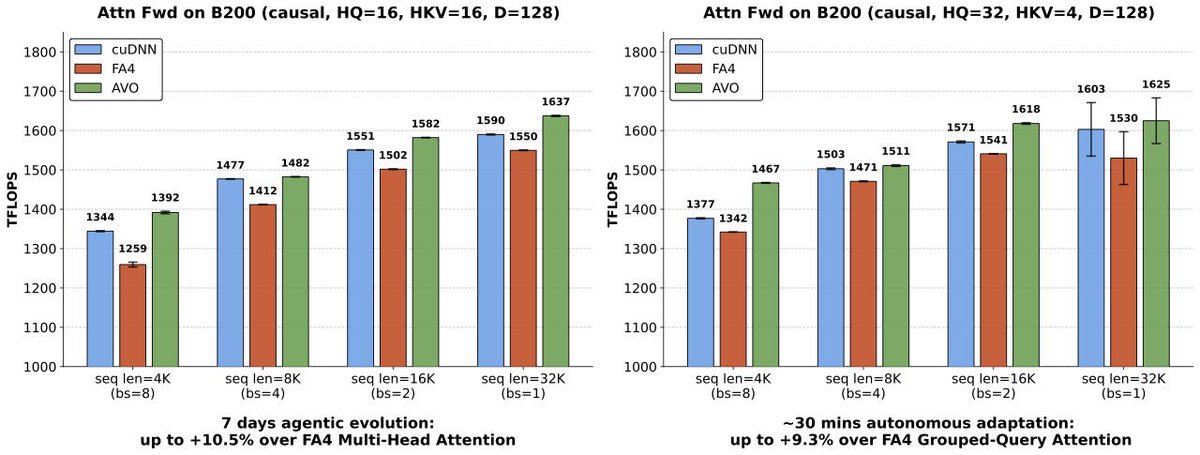
AI agents have reached a significant milestone in software development by demonstrating superhuman capabilities in optimizing attention workloads. This breakthrough marks one of the earliest real indications of artificial intelligence surpassing human expertise in complex computational tasks. The agents operate autonomously, continuously searching for optimization opportunities without any human intervention within the optimization loop for up to seven days. This level of sustained, unsupervised performance represents a substantial advancement in AI's ability to handle intricate technical challenges. The implications extend beyond mere efficiency gains, suggesting a fundamental shift in how software optimization can be approached. By outperforming most human GPU experts in these specialized workloads, the AI agents showcase a new paradigm where machines can independently achieve expert-level results through continuous learning and adaptation. This development not only highlights progress in machine learning algorithms but also raises important questions about the future role of human engineers in technical fields. The sustained optimization without human oversight demonstrates a level of autonomous problem-solving that approaches true superhuman intelligence in software engineering contexts. The achievement underscores the potential for AI to revolutionize not just software performance but also the broader landscape of technical innovation and development processes. As these agents continue to refine their capabilities, they may redefine industry standards for what constitutes expert-level optimization in complex computational environments.